系统中有一棵n个点的完全二叉树,现给出它的BFS层序遍历序列 (从根节点开始,自上而下自左到右的一层一层遍历,即首先访问根,然后从左到右访问第2层上的节点,接着是第三层的节点),请你还原这棵树,并返回加密后的答案。
答案加密方法:所有边两个端点异或的和,即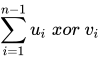 ,其中
,其中) 为一条树上的边。
为一条树上的边。
完全二叉树:若设二叉树的深度为k,除第 k 层外,其它各层 (1~k-1) 的结点数都达到最大个数,第k层所有的结点都连续集中在最左边。
样例构成的完全二叉树为:

[1,2,3,4,5]
18
树边为(1, 2), (1, 3), (2, 4), (2, 5),加密过程为(1^2)+(1^3)+(2^4)+(2^5),答案为18。
数据满足:
/**
 *
 * @param a int整型一维数组 表示这棵完全二叉树的Bfs遍历序列的结点编号
 * @param aLen int a数组长度
 * @return long长整型
 */
long long tree1(int* a, int aLen ) {
    long long sum = 0;
    //性质:若下标从0开始,第i个结点的左孩子为2*i+1,右孩子为2*(i+1)
    for(int i=0;i<aLen/2;i++){
       sum+=(a[i]^a[2*i+1]);
       if((2*(i+1))<aLen) sum+=a[i]^a[2*(i+1)];//可能没有右孩子结点
    }
    return sum;
} typedef long long LL;
typedef struct TreeNode* PTreeNode;
PTreeNode buildTree(int* a, const int aSize, int idx) {
if (idx >= aSize) return NULL;
PTreeNode root = (PTreeNode) malloc(sizeof(struct TreeNode));
root->val = *(a + idx);
root->left = buildTree(a, aSize, idx << 1 | 1);
root->right = buildTree(a, aSize, (idx << 1) + 2);
return root;
}
void xorSum(PTreeNode root, PTreeNode parent, LL* ans) {
if (parent) *ans += parent->val ^ root->val;
if (root->right) xorSum(root->right, root, ans);
if (root->left) xorSum(root->left, root, ans);
}
/**
*
* @param a int整型一维数组 表示这棵完全二叉树的Bfs遍历序列的结点编号
* @param aLen int a数组长度
* @return long长整型
*/
LL tree1(int* a, int aLen) {
PTreeNode root = buildTree(a, aLen, 0);
if (!root) return 0;
LL ans = 0;
xorSum(root, NULL, &ans);
return ans;
} class Solution: def tree1(self , a ): sumTree = 0 i = 0 while (2*i+2) <= len(a): sumTree += a[i] ^ a[2*i+1] if (2*i+2) <= len(a)-1: sumTree += a[i] ^ a[2*i+2] i += 1 return sumTree


扫描二维码,关注牛客网

下载牛客APP,随时随地刷题

扫一扫,把题目装进口袋

扫描二维码,进入QQ群

扫描二维码,关注牛客公众号
 京公网安备
11010502036488号
京公网安备
11010502036488号


