对链表进行插入排序,
从链表第一个元素开始可以视为部分已排序,每次操作从链表中移除一个元素,然后原地将移除的元素插入到已排好序的部分。
数据范围:链表长度满足  ,链表中每个元素满足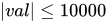
例如输入{2,4,1}时,对应的返回值为{1,2,4},转换过程如下图所示:

/**
 *  #[derive(PartialEq, Eq, Debug, Clone)]
 *  pub struct ListNode {
 *      pub val: i32,
 *      pub next: Option<Box<ListNode>>
 *  }
 *
 *  impl ListNode {
 *      #[inline]
 *      fn new(val: i32) -> Self {
 *          ListNode {
 *              val: val,
 *              next: None,
 *          }
 *      }
 *  }
 */
struct Solution{

}

impl Solution {
    fn new() -> Self {
        Solution{}
    }

    /**
    * 代码中的类名、方法名、参数名已经指定,请勿修改,直接返回方法规定的值即可
    *
    *
        * @param head ListNode类
        * @return ListNode类
    */
    pub fn insertionSortList(&self, head: Option<Box<ListNode>>) -> Option<Box<ListNode>> {
        // write code here
        // let mut ordered_num = 0;
        let mut dummy_head_new = Some(Box::new(ListNode::new(233)));
        let mut dummy_head = Some(ListNode::new(233));
        dummy_head.as_mut()?.next = head;

        // let ordered_list = None;
        let mut p = &mut dummy_head;
        while p.as_ref()?.next.is_some() {
            let mut node = p.as_mut()?.next.take();
            p.as_mut()?.next = node.as_mut()?.next.take();

            let mut p_insert_next = &mut dummy_head_new;
            while p_insert_next.as_ref()?.next.is_some() && p_insert_next.as_ref()?.next.as_ref()?.val <= node.as_ref()?.val {
                p_insert_next = &mut p_insert_next.as_mut()?.next;
            }
            node.as_mut()?.next = p_insert_next.as_mut()?.next.take();
            p_insert_next.as_mut()?.next = node;
        }

        // todo!();
        dummy_head_new?.next
    }
} 
扫描二维码,关注牛客网

下载牛客APP,随时随地刷题

扫一扫,把题目装进口袋

扫描二维码,进入QQ群

扫描二维码,关注牛客公众号
 京公网安备
11010502036488号
京公网安备
11010502036488号


