你可以选择从下标为 0 或下标为 1 的台阶开始爬楼梯。
请你计算并返回达到楼梯顶部的最低花费。
数据范围:数组长度满足 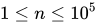 ,数组中的值满足
[2,5,20]
5
你将从下标为1的台阶开始,支付5 ,向上爬两个台阶,到达楼梯顶部。总花费为5
[1,100,1,1,1,90,1,1,80,1]
6
你将从下标为 0 的台阶开始。
1.支付 1 ,向上爬两个台阶,到达下标为 2 的台阶。
2.支付 1 ,向上爬两个台阶,到达下标为 4 的台阶。
3.支付 1 ,向上爬两个台阶,到达下标为 6 的台阶。
4.支付 1 ,向上爬一个台阶,到达下标为 7 的台阶。
5.支付 1 ,向上爬两个台阶,到达下标为 9 的台阶。
6.支付 1 ,向上爬一个台阶,到达楼梯顶部。
总花费为 6 。
public class Solution {
    /**
     * 代码中的类名、方法名、参数名已经指定,请勿修改,直接返回方法规定的值即可
     *
     *
     * @param cost int整型一维数组
     * @return int整型
     */
    public int minCostClimbingStairs (int[] cost) {
        if(cost.length == 1) return cost[0];

        // 初始化两个变量, dp1 = 下标为0的台阶,需要花费, dp2 = 下标为1的台阶,需要花费
        int dp1 = cost[0], dp2 = cost[1];

        // 遍历cost数组,从下标2开始
        for (int i = 2; i < cost.length; i++) {
            // 暂存dp2,因为dp1和dp2的花费需要向后移动,所以dp1的花费需要切换到 dp2
            int temp = dp2;
            // 将当前i层台阶的花费 + dp1花费, 与  当前i层台阶的花费 + dp2花费 取最小花费值 赋给dp2
            // 即当达到下标为i层台阶的时候,花费为 (当前i层台阶的花费 + dp1花费, 与  当前i层台阶的花费 + dp2花费 取最小花费值)
            dp2 = Math.min(cost[i] + dp1, cost[i] + dp2);
            // 然后dp1的花费后移,改为之前的dp2
            dp1 = temp;
        }
        // 循环结束时,对比dp1 和 dp2的花费 取最小值
        return dp1 > dp2 ? dp2 : dp1;
    }
} class Solution {
public:
/**
* 代码中的类名、方法名、参数名已经指定,请勿修改,直接返回方法规定的值即可
*
*
* @param cost int整型vector
* @return int整型
*/
int minCostClimbingStairs(vector<int>& cost) {
// 时间复杂度O(N),空间复杂度O(1)
int dp0 = 0, dp1 = 0, dp2;
for (int i = 2; i <= cost.size(); ++i) {
dp2 = min(dp0 + cost[i - 2], dp1 + cost[i - 1]);
dp0 = dp1;
dp1 = dp2;
}
return dp2;
}
}; import java.util.*;
public class Solution {
/**
* 代码中的类名、方法名、参数名已经指定,请勿修改,直接返回方法规定的值即可
*
*
* @param cost int整型一维数组
* @return int整型
*/
public int minCostClimbingStairs (int[] cost) {
// write code here
if (cost.length == 1) return cost[0];
int first=cost[0],second=cost[1];
for (int i=2;i<cost.length;i++)
{
int temp=second;
second=Math.min(first+cost[i],second+cost[i]);
first=temp;
}
return first < second ? first : second;
}
}
 int minCostClimbingStairs(vector<int>& cost)
    {
        // write code here
        //求有多少阶梯
        int n = cost.size();
        //dp用来保存到达对应层阶梯所需的花费
        vector<int> dp(n);
        dp[0] = cost[0];
        dp[1] = cost[1];
        //保存每层所需花费
        for (int i = 2; i < n; i++)
        {
            dp[i] = cost[i] + min(dp[i-1], dp[i-2]);
        }
        /*
            要么已经登顶dp[n-1]
            要么再爬一层登顶dp[n-2]
            看两者谁花费最少
        */
return min(dp[n-1], dp[n-2]); function minCostClimbingStairs( cost ) {
// write code here
const dp = [];
dp[0] = 0; dp[1] = 0;
for(let i = 2; i <= cost.length; i++) {
dp[i] = Math.min(dp[i-1] + cost[i-1], dp[i-2] + cost[i-2])
}
return dp[cost.length];
}
# 解法一
class Solution:
    def minCostClimbingStairs(self, cost: List[int]) -> int:
        n = len(cost)
        # 初始化一个dp数组,数组的值为走到这一步所需的花费,数组的长度为n+1,因为最终要走出去
        dp = [0] * (n + 1)
        # 从第一步开始走,所以dp[0]和dp[1]都为0,因为不需要花费,所以从第二步开始,所以从下标2开始遍历,到n+1结束
        for i in range(2, n + 1):
            # 当前花费为(从上一步走来的花费加上之前的花费)或者(从上上一步走来的花费加上之前的花费),取最小值
            dp[i] = min(cost[i - 1] + dp[i - 1], cost[i - 2] + dp[i - 2])

        return dp[-1]


# 解法二
class Solution:
    def minCostClimbingStairs(self, cost: List[int]) -> int:
        n = len(cost)
        # 初始化一个dp数组,数组的值为走到这一步所需的再加上走出这一步所需的总花费
        dp = [0] * n

        dp[0:2] = cost[0:2]

        for i in range(2, n):
            dp[i] = cost[i] + min(dp[i - 1], dp[i - 2])

        # 最后一步可以选择从倒数第一步走出去,或者从倒数第二步走出去,取最小值
        return min(dp[-1], dp[-2])
class Solution {
public:
    /**
     * 代码中的类名、方法名、参数名已经指定,请勿修改,直接返回方法规定的值即可
     *
     *
     * @param cost int整型vector
     * @return int整型
     */
    int minCostClimbingStairs(vector<int>& cost) {
        vector<int>dp(cost.size()+1); // dp[i]到达i台阶的 最小费用
        dp[0]=0;  //到达 0 和 1 都不需要花费 都是 0 ;
        dp[1]=0;
        for(int i=2;i<=cost.size();i++)
        {
             //到达i有两种方式 每种方式都是 到达自己的最小费用 + 从自己出发的费用
            dp[i]=min(dp[i-1]+cost[i-1],dp[i-2]+cost[i-2]);
        }
        return dp[cost.size()];
    }
}; class Solution:
def minCostClimbingStairs(self , cost: List[int]) -> int:
# write code here
# 动态规划
# 1、确定状态
# 最后一步前必定是在第i-1级台阶 或 第i-2级台阶
# 原问题:求通过第i级台阶所花费的最少代价
# 子问题:求通过第i-1级台阶和通过第i-2级台阶之间花费的最少代价
# 2、转移方程
# f(i) = min {f(i-1)+cost(i-1), f(i-2)+cost(i-2)}
# 3、初始条件
# 因为可以选择直接从台阶0或台阶1开始爬楼梯,所以: f(0)=0, f(1)=0
# 4、计算顺序
# 从小到大依次计算
# 5、编程实现
n = len(cost) # 有n级台阶
f = [0]*(n+1) # 台阶从0开始,所以索引n为楼梯顶部,即有n+1级台阶
for i in range(2, n+1): # 按从小到大的顺序计算
f[i] = min(f[i-1]+cost[i-1], f[i-2]+cost[i-2])
return f[n] public int minCostClimbingStairs (int[] cost) {
if(cost.length == 1) return cost[0];
if(cost.length == 2) return Math.min(cost[0],cost[1]);
int a,b=cost[1],c = cost[0];
for(int i=2;i<cost.length;i++){
a = Math.min(cost[i]+b,cost[i]+c);
c = b;
b = a;
}
return Math.min(b,c);
} public int minCostClimbingStairs (int[] cost) {
int[] dp=new int[cost.length+1];
dp[0]=0;
dp[1]=0;
for(int i=2;i<cost.length+1;i++){
dp[i]=Math.min(dp[i-1]+cost[i-1],dp[i-2]+cost[i-2]);
}
return dp[cost.length];
} import java.util.*;
public class Solution {
public int minCostClimbingStairs (int[] cost) {
int n = cost.length;
if (n <= 1) return cost[0];
int a = cost[0], b = cost[1], c = 0;
for (int i = 2; i < n; i++) {
c = Math.min(a, b) + cost[i];
a = b;
b = c;
}
return Math.min(a, b);
}
} const int N = 100010;
int dp[N];
class Solution {
public:
/**
* 代码中的类名、方法名、参数名已经指定,请勿修改,直接返回方法规定的值即可
*
*
* @param cost int整型vector
* @return int整型
*/
int minCostClimbingStairs(vector<int>& cost) {
// write code here
n = cost.size();
memset(dp, -1, 4*n);
int res1 = dfs(cost, 0);
memset(dp, -1, 4*n);
int res2 = dfs(cost, 1);
return min(res1, res2);
}
int dfs(vector<int>& cost, int cur) {
if(cur > n) return 0x3f3f3f3f;
if(cur == n) return 0;
if(dp[cur] != -1) return dp[cur];
return dp[cur] = min(dfs(cost, cur + 1), dfs(cost, cur + 2)) + cost[cur];
}
private:
int n;
}; vector<int> dp(cost.size() + 1); for(int i = 2; i <= cost.size(); ++i) dp[i] = min(dp[i-1] + cost[i-1], dp[i-2] + cost[i-2]); return dp[cost.size()];
func minCostClimbingStairs( cost []int ) int {
    // write code here
    dp:=make([]int,len(cost))
    dp[0],dp[1]=cost[0],cost[1]
    for i:=2;i<len(cost);i++{
       dp[i]=min(dp[i-1],dp[i-2])+cost[i]
    }
    return min(dp[len(cost)-1],dp[len(cost)-2])
}
func min(a,b int)int{
    if a>b{
        return b
    }else{
        return a
    }
} public int minCostClimbingStairs (int[] cost) {
int[] dp = new int[cost.length];
dp[dp.length - 1] = cost[dp.length - 1];
dp[dp.length - 2] = Math.min(cost[dp.length - 2], cost[dp.length - 2] + cost[dp.length - 1]);
for (int i = dp.length - 3; i >= 0; i--) {
dp[i]=cost[i]+Math.min(dp[i+1],dp[i+2]);
}
return Math.min(dp[0],dp[1]);
} public class Solution {
/**
* 代码中的类名、方法名、参数名已经指定,请勿修改,直接返回方法规定的值即可
*
*
* @param cost int整型一维数组
* @return int整型
*/
func minCostClimbingStairs ( _ cost: [Int]) -> Int {
//思路:使用dp数组存储最小数,每次移动数组时, 比较i-1和i-2的大小
var dp = [Int]()
//因为0和1不需要花费钱,所以dp[0]和dp[1]为0
dp.append(0)
dp.append(0)
//开始爬楼:楼顶为cost.count+1
for i in 2...cost.count {
let m = min(dp[i-1]+cost[i-1], dp[i-2]+cost[i-2])
dp.append(m)
}
return dp.last! //返回楼顶的花费
}
} func minCostClimbingStairs( cost []int ) int {
// write code here
if len(cost) < 2 {
return 0
}
//到前1个台阶所需花费和前2个台阶所需花费
step_0_cost, step_1_cost := 0, 0
for i := 2; i <= len(cost); i++ {
step_0_cost,step_1_cost = step_1_cost, MinInt(step_0_cost + cost[i-2], step_1_cost + cost[i-1])
}
return step_1_cost
}
func MinInt(a int, b int) int {
if a <= b {
return a
} else {
return b
}
} 


扫描二维码,关注牛客网

下载牛客APP,随时随地刷题

扫一扫,把题目装进口袋

扫描二维码,进入QQ群

扫描二维码,关注牛客公众号
 京公网安备
11010502036488号
京公网安备
11010502036488号


