你可以选择从下标为 0 或下标为 1 的台阶开始爬楼梯。
请你计算并返回达到楼梯顶部的最低花费。
数据范围:数组长度满足 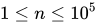 ,数组中的值满足
[2,5,20]
5
你将从下标为1的台阶开始,支付5 ,向上爬两个台阶,到达楼梯顶部。总花费为5
[1,100,1,1,1,90,1,1,80,1]
6
你将从下标为 0 的台阶开始。
1.支付 1 ,向上爬两个台阶,到达下标为 2 的台阶。
2.支付 1 ,向上爬两个台阶,到达下标为 4 的台阶。
3.支付 1 ,向上爬两个台阶,到达下标为 6 的台阶。
4.支付 1 ,向上爬一个台阶,到达下标为 7 的台阶。
5.支付 1 ,向上爬两个台阶,到达下标为 9 的台阶。
6.支付 1 ,向上爬一个台阶,到达楼梯顶部。
总花费为 6 。
public class Solution {
    /**
     * 代码中的类名、方法名、参数名已经指定,请勿修改,直接返回方法规定的值即可
     *
     *
     * @param cost int整型一维数组
     * @return int整型
     */
    func minCostClimbingStairs ( _ cost: [Int]) -> Int {
        //思路:使用dp数组存储最小数,每次移动数组时, 比较i-1和i-2的大小
        var dp = [Int]()
        //因为0和1不需要花费钱,所以dp[0]和dp[1]为0
        dp.append(0)
        dp.append(0)
        //开始爬楼:楼顶为cost.count+1
        for i in 2...cost.count {
            let m = min(dp[i-1]+cost[i-1], dp[i-2]+cost[i-2])
            dp.append(m)
        }
        return dp.last! //返回楼顶的花费
    }
} public class Solution {
/**
* 代码中的类名、方法名、参数名已经指定,请勿修改,直接返回方法规定的值即可
*
*
* @param cost int整型一维数组
* @return int整型
*/
func minCostClimbingStairs ( _ cost: [Int]) -> Int {
guard cost.count > 1 else {
return 0
}
// p[i]代表抵达下标为i的楼层最低花费
var p: [Int] = Array(repeating: Int.max, count: cost.count + 1)
p[0] = 0; p[1] = 0
for i in 2 ... cost.count {
p[i] = min(p[i - 1] + cost[i - 1], p[i - 2] + cost[i - 2])
}
return p.last ?? 0
}
} 


扫描二维码,关注牛客网

下载牛客APP,随时随地刷题

扫一扫,把题目装进口袋

扫描二维码,进入QQ群

扫描二维码,关注牛客公众号
 京公网安备
11010502036488号
京公网安备
11010502036488号


