你可以选择从下标为 0 或下标为 1 的台阶开始爬楼梯。
请你计算并返回达到楼梯顶部的最低花费。
数据范围:数组长度满足 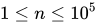 ,数组中的值满足
[2,5,20]
5
你将从下标为1的台阶开始,支付5 ,向上爬两个台阶,到达楼梯顶部。总花费为5
[1,100,1,1,1,90,1,1,80,1]
6
你将从下标为 0 的台阶开始。
1.支付 1 ,向上爬两个台阶,到达下标为 2 的台阶。
2.支付 1 ,向上爬两个台阶,到达下标为 4 的台阶。
3.支付 1 ,向上爬两个台阶,到达下标为 6 的台阶。
4.支付 1 ,向上爬一个台阶,到达下标为 7 的台阶。
5.支付 1 ,向上爬两个台阶,到达下标为 9 的台阶。
6.支付 1 ,向上爬一个台阶,到达楼梯顶部。
总花费为 6 。
func minCostClimbingStairs( cost []int ) int {
    // write code here
    if len(cost) < 2 {
        return 0
    }
    //到前1个台阶所需花费和前2个台阶所需花费
    step_0_cost, step_1_cost := 0, 0
    for i := 2; i <= len(cost); i++ {
        step_0_cost,step_1_cost = step_1_cost, MinInt(step_0_cost + cost[i-2], step_1_cost + cost[i-1])
    }
    return step_1_cost
}

func MinInt(a int, b int) int {
    if a <= b {
        return a
    } else {
        return b
    }
} func minCostClimbingStairs( cost []int ) int {
// write code here
min := func(x, y int) int {
if x < y {
return x
}
return y
}
dp := make([]int, len(cost)+1)
for i := 2; i <= len(cost); i++ {
dp[i] = min(dp[i-1]+cost[i-1], dp[i-2]+cost[i-2])
}
return dp[len(cost)]
} func minCostClimbingStairs( cost []int ) int {
// write code here
dp:=make([]int,len(cost))
dp[0],dp[1]=cost[0],cost[1]
for i:=2;i<len(cost);i++{
dp[i]=min(dp[i-1],dp[i-2])+cost[i]
}
return min(dp[len(cost)-1],dp[len(cost)-2])
}
func min(a,b int)int{
if a>b{
return b
}else{
return a
}
} 


扫描二维码,关注牛客网

下载牛客APP,随时随地刷题

扫一扫,把题目装进口袋

扫描二维码,进入QQ群

扫描二维码,关注牛客公众号
 京公网安备
11010502036488号
京公网安备
11010502036488号


