你可以选择从下标为 0 或下标为 1 的台阶开始爬楼梯。
请你计算并返回达到楼梯顶部的最低花费。
数据范围:数组长度满足 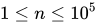 ,数组中的值满足
[2,5,20]
5
你将从下标为1的台阶开始,支付5 ,向上爬两个台阶,到达楼梯顶部。总花费为5
[1,100,1,1,1,90,1,1,80,1]
6
你将从下标为 0 的台阶开始。
1.支付 1 ,向上爬两个台阶,到达下标为 2 的台阶。
2.支付 1 ,向上爬两个台阶,到达下标为 4 的台阶。
3.支付 1 ,向上爬两个台阶,到达下标为 6 的台阶。
4.支付 1 ,向上爬一个台阶,到达下标为 7 的台阶。
5.支付 1 ,向上爬两个台阶,到达下标为 9 的台阶。
6.支付 1 ,向上爬一个台阶,到达楼梯顶部。
总花费为 6 。
/**
 * 代码中的类名、方法名、参数名已经指定,请勿修改,直接返回方法规定的值即可
 *
 *
 * @param cost int整型一维数组
 * @param costLen int cost数组长度
 * @return int整型
 */
#include <stdio.h>
int minCost(int number1,int number2)
{
    if (number1<number2)
    {
        return number1;
    }
    else
    {
         return number2;
    }
}

int minCostClimbingStairs(int* cost, int costLen ) {
    // write code here
    if (costLen==1)
    {
        return cost[costLen-1];
    }
    else
    {
        int dp[costLen];

        //考虑是第一步是走一步还是两步
        dp[0]=cost[0];

        dp[1]=cost[1];

        for (int i=2;i<costLen;i++)
        {
            //考虑到i所需要的金币数

            //首先考虑走i
            //dp[i]=minCost(dp[i-1],dp[i-2])+cost[i]

            //然后考虑不走i
            //dp[i]=dp[i-1]+cost[i+1]

            dp[i]=minCost(minCost(dp[i-1],dp[i-2])+cost[i],dp[i-1]+cost[i+1]);
            printf("%d",dp[i]);
        }

        //最后直接返回到最后一个需要花费的金币数
        return dp[costLen-1];
    }
} int minCostClimbingStairs(int* cost, int costLen ) {
// write code here
// int ret = 0;
int dp[costLen];
dp[0] = 0;
dp[1] = 0;
for(int i = 2; i <= costLen; i++){
dp[i] = (dp[i - 1] + cost[i - 1]) > (dp[i - 2] + cost[i - 2]) ? (dp[i - 2] + cost[i - 2]) : (dp[i - 1] + cost[i - 1]);
}
return dp[costLen];
} #include <math.h>
#include <stdlib.h>
int minCostClimbingStairs(int* cost, int costLen ) {
int *minCost = (int*)malloc(sizeof(int) * (costLen + 1));
minCost[0] = 0, minCost[1] = 0;//在clion里默认初始化为0,这里没有害我浪费半个小时
for(int i = 2; i <= costLen; i++){
minCost[i] = (int)fmin(cost[i - 1] + minCost[i - 1], cost[i - 2] + minCost[i - 2]);
}
return minCost[costLen];
} int minCostClimbingStairs(int* cost, int costLen ) {
// write code here
if(costLen==1||costLen ==0)
{
return 0;
}
int count1 = minCostClimbingStairs(cost,costLen-1) + cost[costLen-1];
int count2 = minCostClimbingStairs(cost,costLen-2) + cost[costLen-2];
return count1<count2?count1:count2;
}
一开始用C++写发现时间超了,以为这道题只能用C写,用C写发现时间也超了,官方就完全不给活路呗。


扫描二维码,关注牛客网

下载牛客APP,随时随地刷题

扫一扫,把题目装进口袋

扫描二维码,进入QQ群

扫描二维码,关注牛客公众号
 京公网安备
11010502036488号
京公网安备
11010502036488号


