给定一个循环的数组 nums ,即 nums 的第一个元素可以视为是最后一个元素的下一个元素。返回 nums 中每个元素的后面第一个比他大的元素,如果不存在比他大的元素,则返回 -1。
例如,有数组 [2,3,4,1] 则返回 [3,4,-1,2] ,其中第一二个元素后面第一个比他们大的元素均是下一个元素,第三个元素是最大的,所以输出 -1,而最后一个元素的下一个元素认为是数组的第一个元素,因此是 2。
数据范围:数组长度满足  ,数组中的元素满足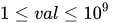
[2,3,4,1]
[3,4,-1,2]
其中第一二个元素后面第一个比他们大的元素均是下一个元素,第三个元素是最大的,所以输出 -1,而最后一个元素的下一个元素认为是数组的第一个元素,因此是 2
[4,3,2,1]
[-1,4,4,4]
 public static ArrayList<Integer> nextBigger(ArrayList<Integer> nums) {
        // write code here
        int len = nums.size();
        ArrayList<Integer> ret = new ArrayList<>();
        Stack<Integer> monoStack = new Stack<>();
        // 找到最大的值的下标,从最大的开始遍历

        int maxIndex = 0;
        ret.add(-1);
        for (int i = 1; i < len; i++){
            ret.add(-1);
            if (nums.get(i) > nums.get(maxIndex)) {
                maxIndex = i;
            }
        }

        int i = maxIndex;
        do {
            while (!monoStack.isEmpty() && nums.get(i) >= nums.get(monoStack.peek()))
                // 如果发现了较大的数,弹出
                monoStack.pop();
            // 为空: 如果最后一个元素,则更新为第一个,否则为 -1, 不为空:直接更新
            ret.set(i, monoStack.isEmpty() ? -1 : nums.get(monoStack.peek()));
            monoStack.push(i);
            i--;
            if (i == -1)
                i = len - 1;
        } while (i != maxIndex);

        return ret;
    }
public ArrayList<Integer> nextBigger(ArrayList<Integer> nums) {
        // write code here
        int size = nums.size();
        ArrayList<Integer> result = new ArrayList<>();
        for (int i = 0; i < size; i++) {
            // 全部置为-1
            result.add(i, -1);
        }
        Stack<Integer> stack = new Stack<>();
        // 数组double

        for (int i = 0; i < size; i++) {
            nums.add(nums.get(i));
        }
        for (int i = 0; i < nums.size(); i++) {
            while (!stack.isEmpty() && nums.get(i) > nums.get(stack.peek())) {
                Integer pop = stack.pop();
                if (pop < size) {
                    result.set(pop, nums.get(i));
                }
            }
            stack.push(i);
        }

        return result;
} public ArrayList<Integer> nextBigger (ArrayList<Integer> nums) {
// write code here
Stack<Integer> stack = new Stack<>();
int n = nums.size();
ArrayList<Integer> ans = new ArrayList<>();
for(int i = 0; i < n; i++){
ans.add(-1);
}
for(int i = 0; i < n * 2; i++){
while(!stack.isEmpty() && nums.get(i % n) > nums.get(stack.peek())){
int x = stack.pop();
ans.set(x, nums.get(i % n));
}
stack.push(i % n);
}
return ans; import java.util.*;
import java.util.stream.Collectors;
/**
* NC354 下一个更大的数(二)
* @author d3y1
*/
public class Solution {
/**
* 代码中的类名、方法名、参数名已经指定,请勿修改,直接返回方法规定的值即可
*
*
* @param nums int整型ArrayList
* @return int整型ArrayList
*/
public ArrayList<Integer> nextBigger (ArrayList<Integer> nums) {
// return solution1(nums);
// return solution11(nums);
// return solution111(nums);
return solution1111(nums);
// return solution2(nums);
// return solution22(nums);
}
/**
* 单调栈: 单调减(从右往左)
* @param nums
* @return
*/
private ArrayList<Integer> solution1(ArrayList<Integer> nums){
int n = nums.size();
Stack<Integer> stack = new Stack<>();
ArrayList<Integer> list = new ArrayList<>(n);
for(int i=n-1; i>=0; i--){
while(!stack.isEmpty() && stack.peek()<=nums.get(i)){
stack.pop();
}
list.add(0, stack.isEmpty()?-1:stack.peek());
stack.push(nums.get(i));
}
for(int i=n-1; i>=0; i--){
while(!stack.isEmpty() && stack.peek()<=nums.get(i)){
stack.pop();
}
list.set(i, stack.isEmpty()?-1:stack.peek());
stack.push(nums.get(i));
}
return list;
}
/**
* 单调栈: 单调减(从右往左)
* @param nums
* @return
*/
private ArrayList<Integer> solution11(ArrayList<Integer> nums){
int n = nums.size();
Stack<Integer> stack = new Stack<>();
int[] results = new int[n];
for(int i=n-1; i>=0; i--){
while(!stack.isEmpty() && stack.peek()<=nums.get(i)){
stack.pop();
}
results[i] = stack.isEmpty()?-1:stack.peek();
stack.push(nums.get(i));
}
for(int i=n-1; i>=0; i--){
while(!stack.isEmpty() && stack.peek()<=nums.get(i)){
stack.pop();
}
results[i] = stack.isEmpty()?-1:stack.peek();
stack.push(nums.get(i));
}
ArrayList<Integer> list = Arrays.stream(results) // 创建IntStream
.boxed() // 将IntStream转换为Stream<Integer>
.collect(Collectors.toCollection(ArrayList::new));
return list;
}
/**
* 单调栈: 单调减(从右往左)
* @param nums
* @return
*/
private ArrayList<Integer> solution111(ArrayList<Integer> nums){
int n = nums.size();
Stack<Integer> stack = new Stack<>();
int[] results = new int[n];
for(int i=2*n-1; i>=0; i--){
// 单调栈 单调减(从右往左)
while(!stack.isEmpty() && stack.peek()<=nums.get(i%n)){
stack.pop();
}
results[i%n] = stack.isEmpty()?-1:stack.peek();
stack.push(nums.get(i%n));
}
ArrayList<Integer> list = Arrays.stream(results) // 创建IntStream
.boxed() // 将IntStream转换为Stream<Integer>
.collect(Collectors.toCollection(ArrayList::new));
return list;
}
/**
* 单调栈: 单调减(从右往左)
* @param nums
* @return
*/
private ArrayList<Integer> solution1111(ArrayList<Integer> nums){
int n = nums.size();
Stack<Integer> stack = new Stack<>();
ArrayList<Integer> list = new ArrayList<>(n);
for(int i=0; i<n; i++){
list.add(-1);
}
for(int i=2*n-1; i>=0; i--){
// 单调栈 单调减(从右往左)
while(!stack.isEmpty() && stack.peek()<=nums.get(i%n)){
stack.pop();
}
list.set(i%n, stack.isEmpty()?-1:stack.peek());
stack.push(nums.get(i%n));
}
return list;
}
/**
* 单调栈: 单调减(从左往右)
* @param nums
* @return
*/
private ArrayList<Integer> solution2(ArrayList<Integer> nums){
int n = nums.size();
Stack<Integer> stack = new Stack<>();
ArrayList<Integer> list = new ArrayList<>(n);
for(int i=0; i<n; i++){
list.add(-1);
}
for(int i=0; i<n*2; i++){
// 单调栈 单调减(从左往右)
while(!stack.isEmpty() && nums.get(stack.peek())<nums.get(i%n)){
list.set(stack.pop(), nums.get(i%n));
}
stack.push(i%n);
}
return list;
}
/**
* 单调栈: 单调减(从左往右)
* @param nums
* @return
*/
private ArrayList<Integer> solution22(ArrayList<Integer> nums){
int n = nums.size();
Stack<Integer> stack = new Stack<>();
int[] results = new int[n];
Arrays.fill(results, -1);
for(int i=0; i<n*2; i++){
// 单调栈 单调减(从左往右)
while(!stack.isEmpty() && nums.get(stack.peek())<nums.get(i%n)){
results[stack.pop()] = nums.get(i%n);
}
stack.push(i%n);
}
ArrayList<Integer> list = Arrays.stream(results) // 创建IntStream
.boxed() // 将IntStream转换为Stream<Integer>
.collect(Collectors.toCollection(ArrayList::new));
return list;
}
} package main
//import "fmt"
/**
* 代码中的类名、方法名、参数名已经指定,请勿修改,直接返回方法规定的值即可
*
*
* @param nums int整型一维数组
* @return int整型一维数组
*/
func nextBigger( nums []int ) []int {
n:=len(nums)
ans:=make([]int,n)
for i,_:=range ans{
ans[i]=-1
}
stk:=[]int{}
for i,x:=range append(nums,nums...){
for len(stk)>0&&nums[stk[len(stk)-1]]<x{
ans[stk[len(stk)-1]]=x
stk=stk[:len(stk)-1]
}
stk=append(stk,i%n)
}
return ans
} # -*- coding: utf-8 -*- # # 代码中的类名、方法名、参数名已经指定,请勿修改,直接返回方法规定的值即可 # # # @param nums int整型一维数组 # @return int整型一维数组 # class Solution: """ 题目: https://www.nowcoder.com/practice/3923970e95b140fdb65e6c00bcda403d?tpId=196&tqId=40444&rp=1&ru=/exam/oj&qru=/exam/oj&sourceUrl=%2Fexam%2Foj%3Fpage%3D8%26tab%3D%25E7%25AE%2597%25E6%25B3%2595%25E7%25AF%2587%26topicId%3D196&difficulty=undefined&judgeStatus=undefined&tags=&title= 算法: 环形数组问题: 先将数组展开,新数组看作是nums + nums[:-1],新数组的长度变为0 ~ 2*n-2;当然我们也可以对n取模,这样就不需要分配空间了 建立单调递减栈,栈中存储元素下标 遍历新数组0 ~ 2n-2: 若stack为空 或者 nums[i] < stack[-1]: 下标i%n入栈 否则: 栈顶元素出栈 res[stack[-1]] = nums[i] 复杂度: 时间复杂度:O(n) 空间复杂度:O(n), 单调栈的长度 """ def nextBigger(self, nums): # write code here n = len(nums) res, stack = [-1] * n, [] for i in range(2 * n - 1): while stack and nums[stack[-1]] < nums[i % n]: idx = stack.pop() if res[idx] == -1: res[idx] = nums[i % n] stack.append(i % n) return res if __name__ == "__main__": sol = Solution() # nums = [2, 3, 4, 1] nums = [4, 3, 2, 1] res = sol.nextBigger(nums) print res
import java.util.*;


public class Solution {
    /**
     * 代码中的类名、方法名、参数名已经指定,请勿修改,直接返回方法规定的值即可
     *
     *
     * @param nums int整型ArrayList
     * @return int整型ArrayList
     */
    public ArrayList<Integer> nextBigger(ArrayList<Integer> nums) {
        // write code here
        int size = nums.size();
        ArrayList<Integer> result = new ArrayList<>();
        for (int i = 0; i < size; i++) {
            // 全部置为-1
            result.add(i, -1);
        }
        Stack<Integer> stack = new Stack<>();
        // 数组double

        for (int i = 0; i < size; i++) {
            nums.add(nums.get(i));
        }
        for (int i = 0; i < nums.size(); i++) {
            while (!stack.isEmpty() && nums.get(i) > nums.get(stack.peek())) {
                Integer pop = stack.pop();
                if (pop < size) {
                    result.set(pop, nums.get(i));
                }
            }
            stack.push(i);
        }

        return result;
    }
} public class Solution {
/**
* 代码中的类名、方法名、参数名已经指定,请勿修改,直接返回方法规定的值即可
*
*
* @param nums int整型ArrayList
* @return int整型ArrayList
*/
public ArrayList<Integer> nextBigger (ArrayList<Integer> nums) {
// write code here
Stack<Integer> s = new Stack<>();
int n = nums.size();
int[] temp = new int[n];
for(int i=n*2-1;i>=0;i--){
while(!s.empty()&&s.peek()<=nums.get(i%n)){
s.pop();
}
temp[i%n]=s.empty()?-1:s.peek();
s.push(nums.get(i%n));
}
ArrayList<Integer> res = new ArrayList<>();
for(int i=0;i<n;i++){
res.add(temp[i]);
}
return res;
}
} 


扫描二维码,关注牛客网

下载牛客APP,随时随地刷题

扫一扫,把题目装进口袋

扫描二维码,进入QQ群

扫描二维码,关注牛客公众号
 京公网安备
11010502036488号
京公网安备
11010502036488号


